
Mini-Bee Missions
Humanitarian missions where vertical access changes everything.
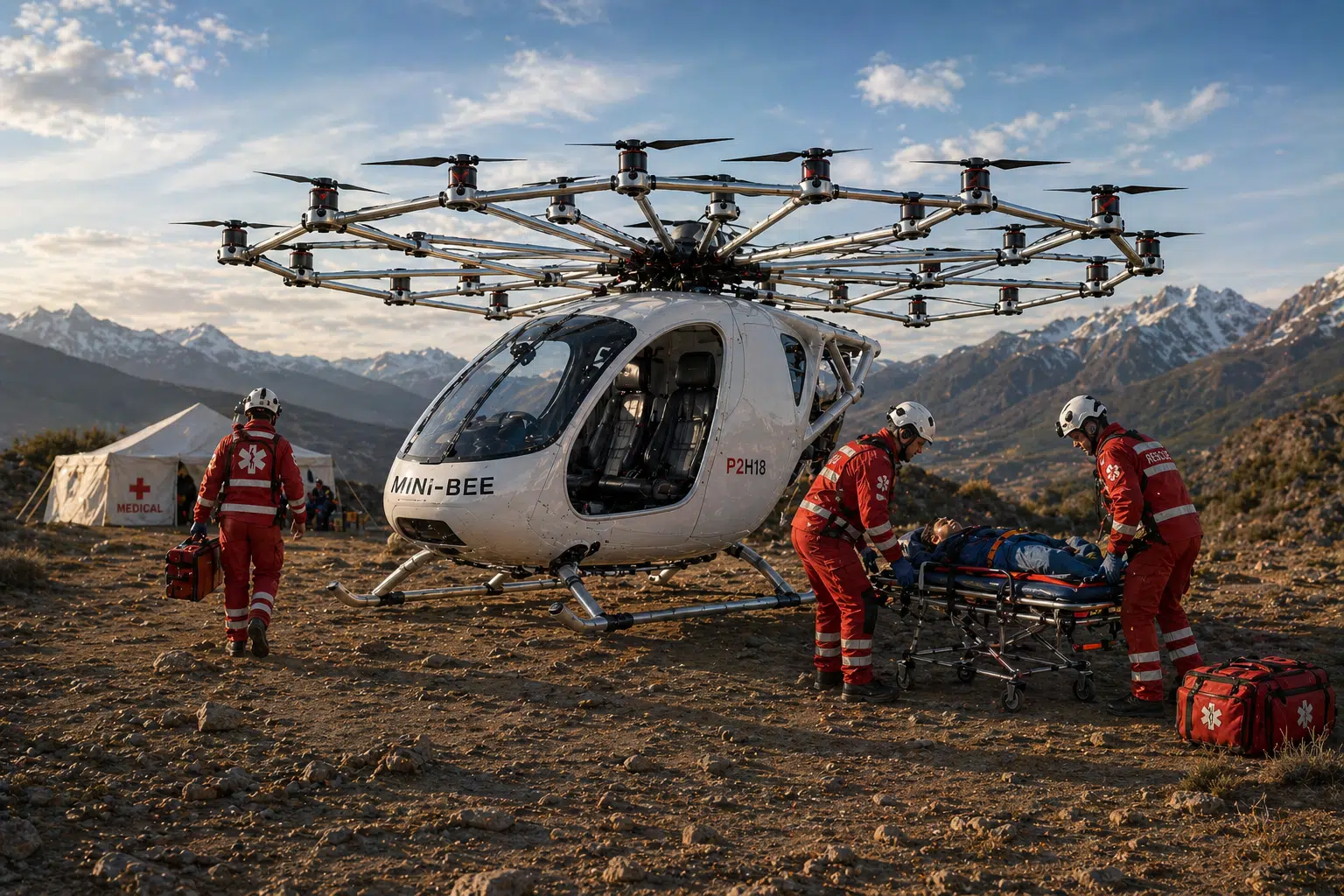
Mini-Bee is designed for missions where road access is limited, infrastructure is damaged, or time-to-response directly affects the outcome.
Its hybrid VTOL architecture supports medical access, remote logistics, disaster response and field operations with a reduced deployment footprint.
Medical
urgent access
Remote
field access
Logistics
light cargo
Mission principle
The aircraft is designed for useful missions, not speculative mobility.
Mini-Bee focuses on emergency response, humanitarian logistics and access to difficult terrain. The mission logic is simple: reach the right place faster, with less infrastructure.
Core mission families
Four mission families define the operational value of Mini-Bee.
01
Light air ambulance
Support urgent medical access, stabilized patient transport, or the movement of medical personnel when road access is slow or impossible.
02
Remote area access
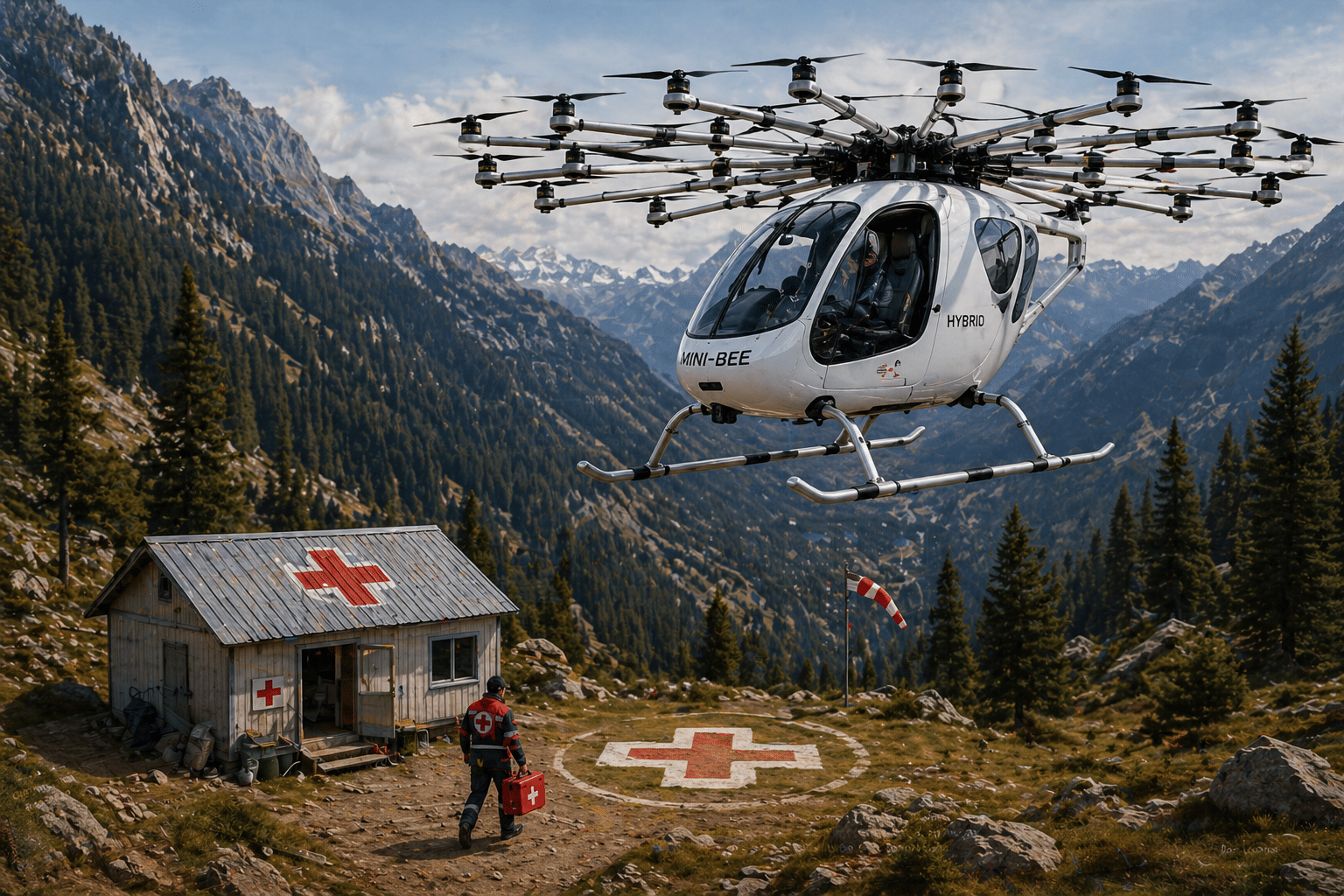
Reach isolated communities, mountain areas, islands, rural clinics or emergency zones without relying on runway infrastructure.
03
Emergency field logistics
Transport urgent equipment, essential components, small cargo, energy support or medical supplies close to the operational area.
04
Humanitarian deployment
Support field operations, crisis camps, isolated infrastructure and humanitarian response where compact air mobility can reduce delay.
Why VTOL matters
Vertical access reduces dependency on damaged or missing infrastructure.
In humanitarian operations, the bottleneck is often not distance but access. Roads may be blocked, runways may be unavailable, and ground transport may take hours.
- Take off and land close to the mission area
- Reduce reliance on prepared runway infrastructure
- Support time-sensitive emergency response
- Reach remote areas with a smaller logistics footprint
Deployment logic
Mini-Bee is designed to be deployed close to the mission zone.
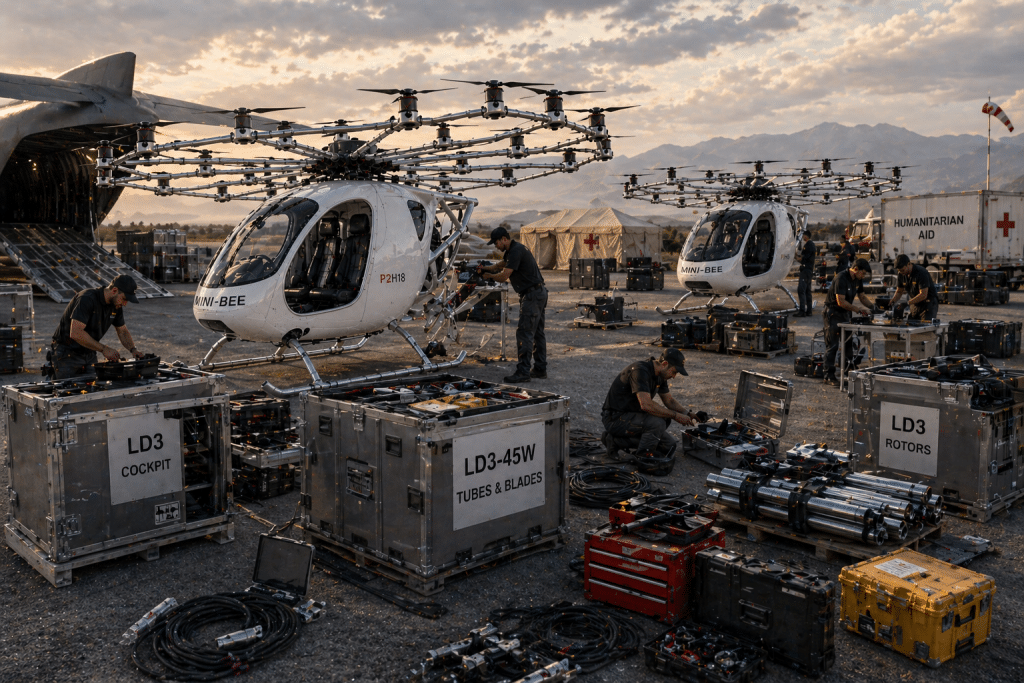
The project explores modular transport and tarmac assembly logic to reduce the complexity normally associated with moving small aircraft into crisis areas.
Mission readiness
From civil cargo transport to field operation.
Mini-Bee is designed around a deployment approach where the aircraft can be transported, unloaded, assembled and prepared close to the operational area.
- Modular transport logic
- Reduced ground support requirements
- Fast preparation near the mission area
- Practical support for humanitarian response
Mission summary
Mini-Bee brings vertical mobility to missions where time, access and simplicity matter.
The aircraft concept is designed to support humanitarian teams with a compact VTOL platform focused on medical access, remote operations and rapid field deployment.