
Mini-Bee Project
Project History
The Mini-Bee project was launched in January 2015 to explore the potential of individual air transportation.
By 2022/2023, it had evolved into a dynamic R&D collaborative initiative involving both academic institutions and industrial partners.
2015
project launch
TRL1
achieved in 2016
TRL2
reached in 2017
TRL3
collaborative studies
From concept to collaborative demonstrator
Mini-Bee grew from an individual air mobility idea into an open engineering demonstrator.
The project’s evolution has been driven by academic studies, industrial support, public demonstrations and progressive technical maturation.
Early milestones
A project revealed through prototypes, studies and public showcases.
2015
First mock-up
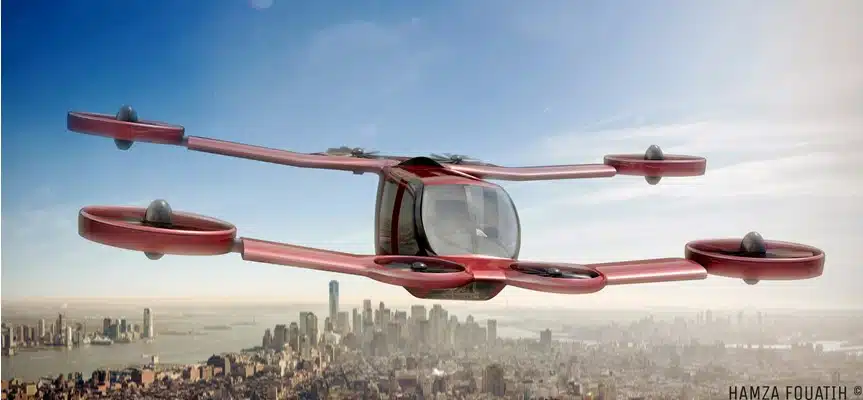
At the 2015 Paris Air Show, the first Mini-Bee mock-up was presented and received enthusiastic feedback.
2016
TRL1 achieved
Following the first studies led by multiple universities, the project achieved TRL1 by June 2016.
2017
TRL2 and TRL3 start
During summer 2017, Mini-Bee reached TRL2 and was showcased again at the Paris Air Show before entering TRL3 studies.
2018–2019
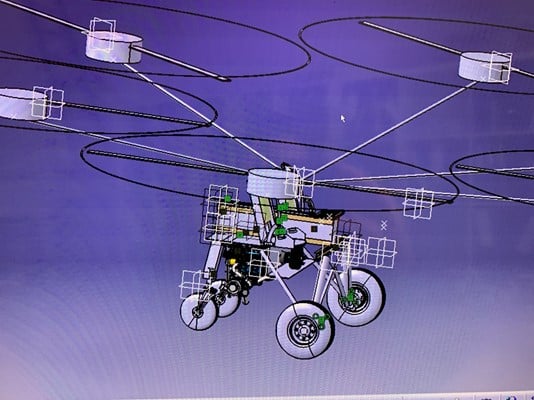
Propulsion studies, full-scale mock-up and public attention.
In 2018, the team made significant progress in propulsion systems and hybrid configuration. A full-scale mock-up was built, allowing ergonomic validation and interior layout refinements.
By 2019, the Mini-Bee had been unveiled to the public at the Paris Air Show. With its futuristic design and innovative electric-hybrid architecture, the aircraft attracted widespread attention.
Collaborative momentum
Mini-Bee became a symbol of collaborative innovation in hybrid VTOL aviation.
Engineers, designers and propulsion specialists joined forces to refine the aircraft’s structure, energy management and control systems.

Air ambulance concept
Mini-Bee Hybrid VTOL for Air Ambulance.
Medical emergencies demand rapid and reliable transportation. Ground ambulances face traffic and infrastructure challenges, while helicopters can be costly and limited in access.
Mini-Bee Hybrid VTOL proposes a new approach, combining vertical access, hybrid propulsion and reduced logistics complexity for light emergency missions.
01
Urban emergency access
Mini-Bee is intended to reach patients in dense urban zones where traffic and infrastructure can delay ground response.
02
Remote response
Vertical takeoff and landing capability can support emergency access in rural or underserved areas.
03
Lower footprint
The hybrid VTOL architecture targets lower emissions, extended range and more efficient mission deployment.
Open collaboration
The Mini-Bee project operates under an open collaborative framework.
The Mini-Bee Project operates under a Lesser Open Source License, promoting transparent collaboration and access to open-source documentation through the official wiki.
Hybrid VTOL history
History of VTOL Hybrid Multicopter Projects
VTOL hybrid multicopters combine the vertical lift of helicopters with the speed and range of fixed-wing aircraft. These systems evolved from early autogyro and helicopter concepts to the modern hybrid drones of today.

Mission flexibility
Hybrid configurations expand VTOL mission possibilities.
Hybrid configurations make it possible to take off vertically in tight spaces and cruise horizontally at higher efficiency.
From environmental monitoring to tactical operations, hybrid VTOLs are redefining mission flexibility in the air.
Urban Air Mobility
Urban Air Mobility is the next frontier.
Urban Air Mobility technologies offer a cleaner, faster alternative to congested ground transportation. With electric power and vertical lift, eVTOL aircraft promise new possibilities for urban logistics and passenger travel.
01
Shorter commute times
Vertical access can reduce dependency on congested ground networks for selected routes.
02
Low-emission flight
Electric and hybrid propulsion can reduce local emissions compared with conventional aircraft architectures.
03
Scalable infrastructure
Future vertiports and distributed infrastructure may support scalable urban and regional VTOL operations.
Collaborative innovation
Mini-Bee is more than a concept — it is an open collaborative commitment.
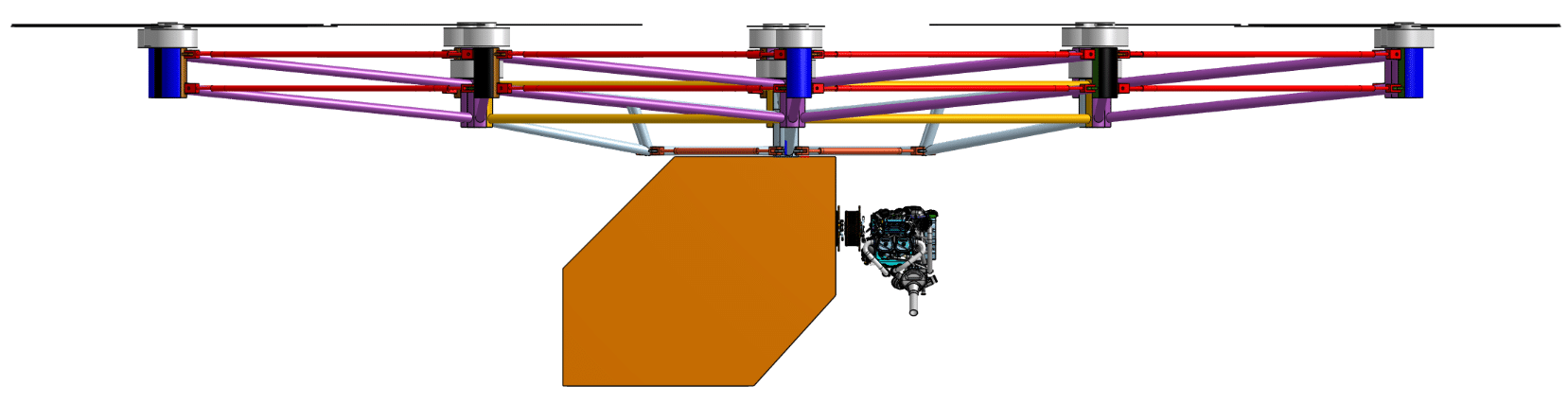
Mini-Bee is the result of open collaboration between researchers, developers, engineers, and dreamers. Together, they are building the next generation of vertical mobility systems through hybrid propulsion and advanced avionics.
It is a commitment to more sustainable, accessible, and adaptable air mobility for the world of tomorrow.