
Mini-Bee Hybrid VTOL · TRL4 demonstrator
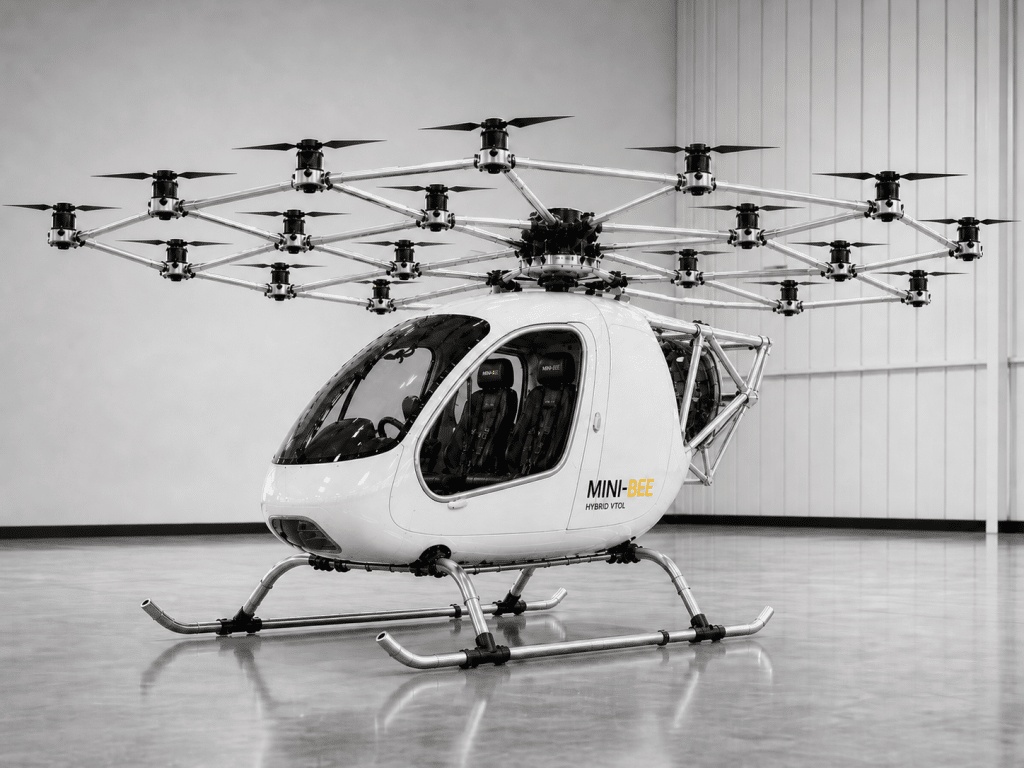
Mini-Bee: a hybrid eVTOL aircraft.
Mini-Bee is a two-seat hybrid multicopter designed for light air ambulance missions, rapid field deployment and emergency support where runway access is limited or unavailable.

18
distributed rotors
2
people on board
160
km/h cruise speed
450
km target range
100
kW cruise power
700
kg MTOW
Mission-driven aircraft concept
Built around access, simplicity and medical response.
Mini-Bee is not designed as a conventional helicopter replacement. It is a compact hybrid VTOL platform focused on missions where logistics, rapid assembly and operational cost matter as much as flight performance.
Hybrid architecture
Hybrid endurance with distributed lift.
The aircraft combines a Rotax 916 iS thermal engine, twin EMRAX 208 high-voltage machines, supercapacitor support and 18 distributed electric rotors for vertical lift and redundancy.
- Hybrid thermal-electric architecture
- 18 distributed electric rotors
- Vertical takeoff and landing without runway infrastructure
Operational value
A professional VTOL platform for field missions.
The Mini-Bee concept is strongest when presented through real use cases: medical evacuation, crisis support, remote access and emergency power for field operations.
01
Vertical access
Designed for takeoff and landing without runway infrastructure, supporting missions in isolated or damaged areas.
02
Hybrid endurance
A thermal-electric architecture targets longer operational range than battery-only multicopter concepts.
03
Deployable logistics
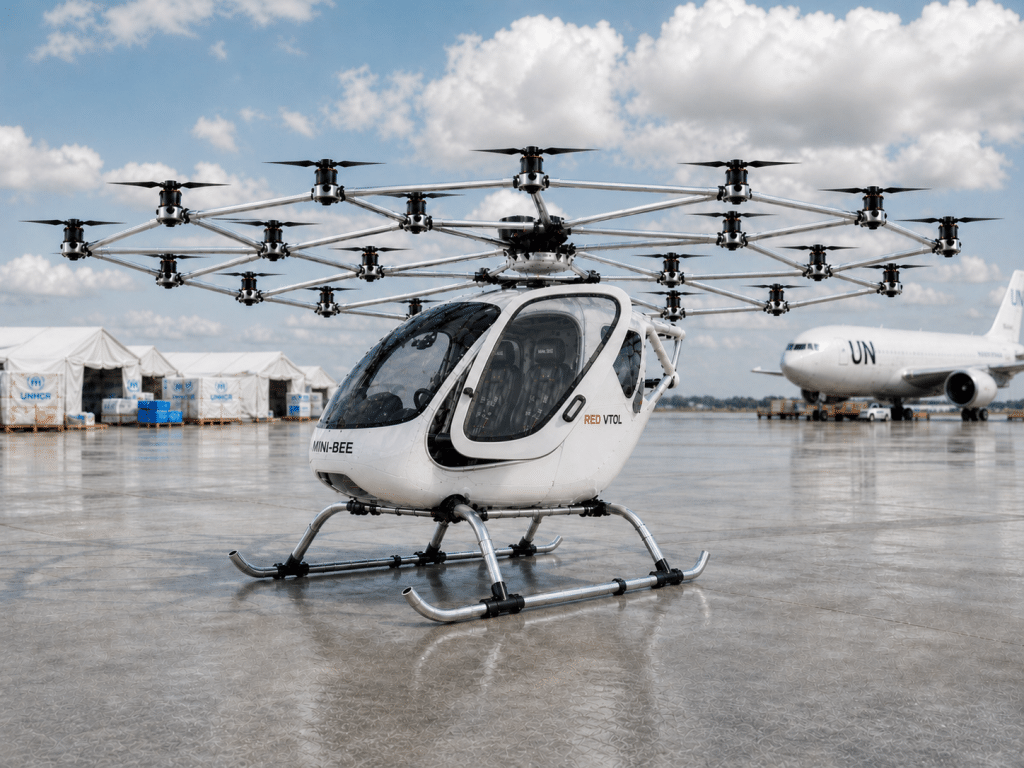
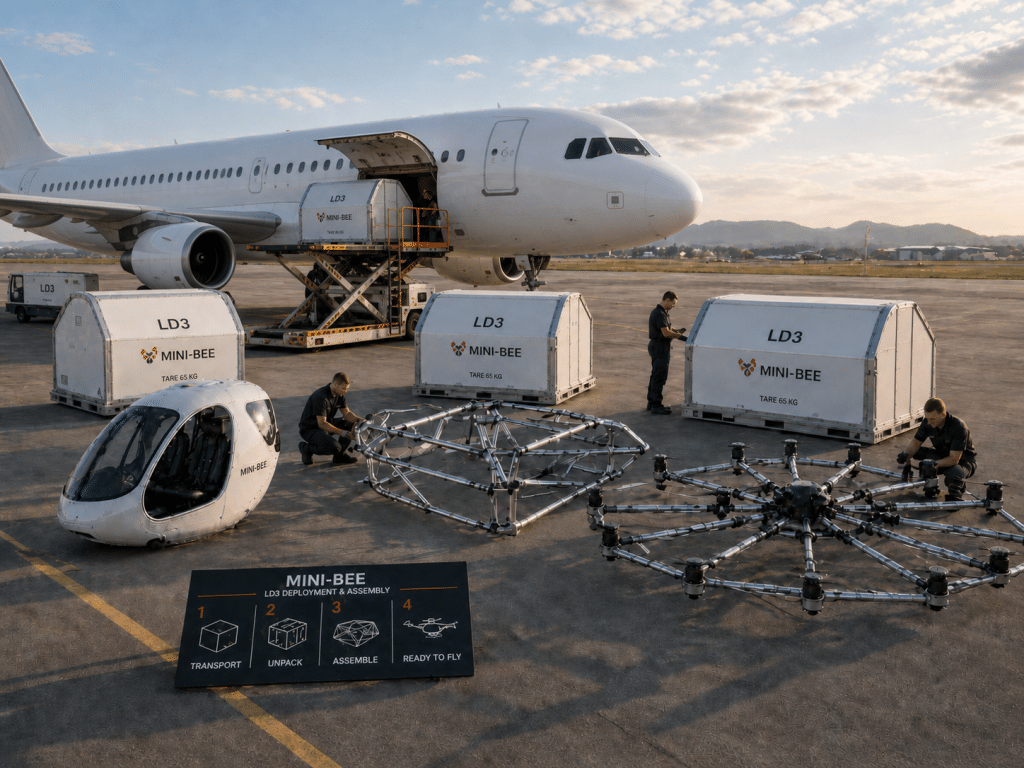
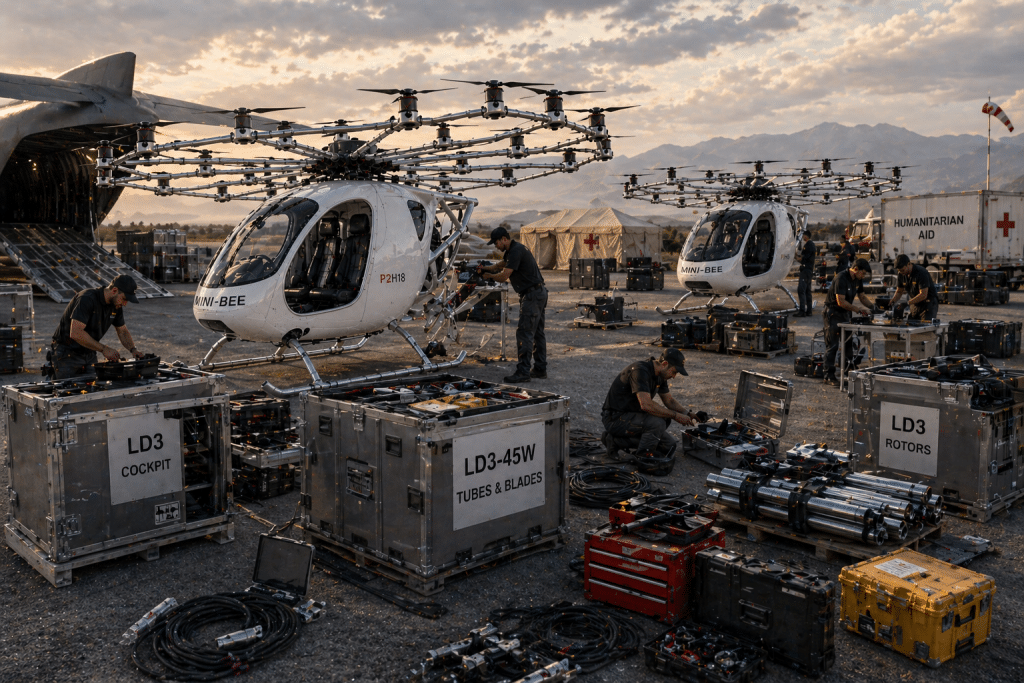
Modular structure designed for air transport in LD3 containers and reassembly on tarmac.
Technical overview
Hybrid power, distributed lift and simplified controls.
Configuration
2PoB hybrid VTOL multicopter
Thermal engine
Rotax 916 iS · 160 HP
Electric machines
2 × EMRAX 208 twin HV CC
Rotors
18 distributed electric rotors
Flight control
STM32 / Nucleo-based FCU
Avionics
Kanardia EMSIS, DAQU, indicators
Safety approach
Redundancy, parachute, emergency beacon
Core missions
Humanitarian use cases with direct field relevance.
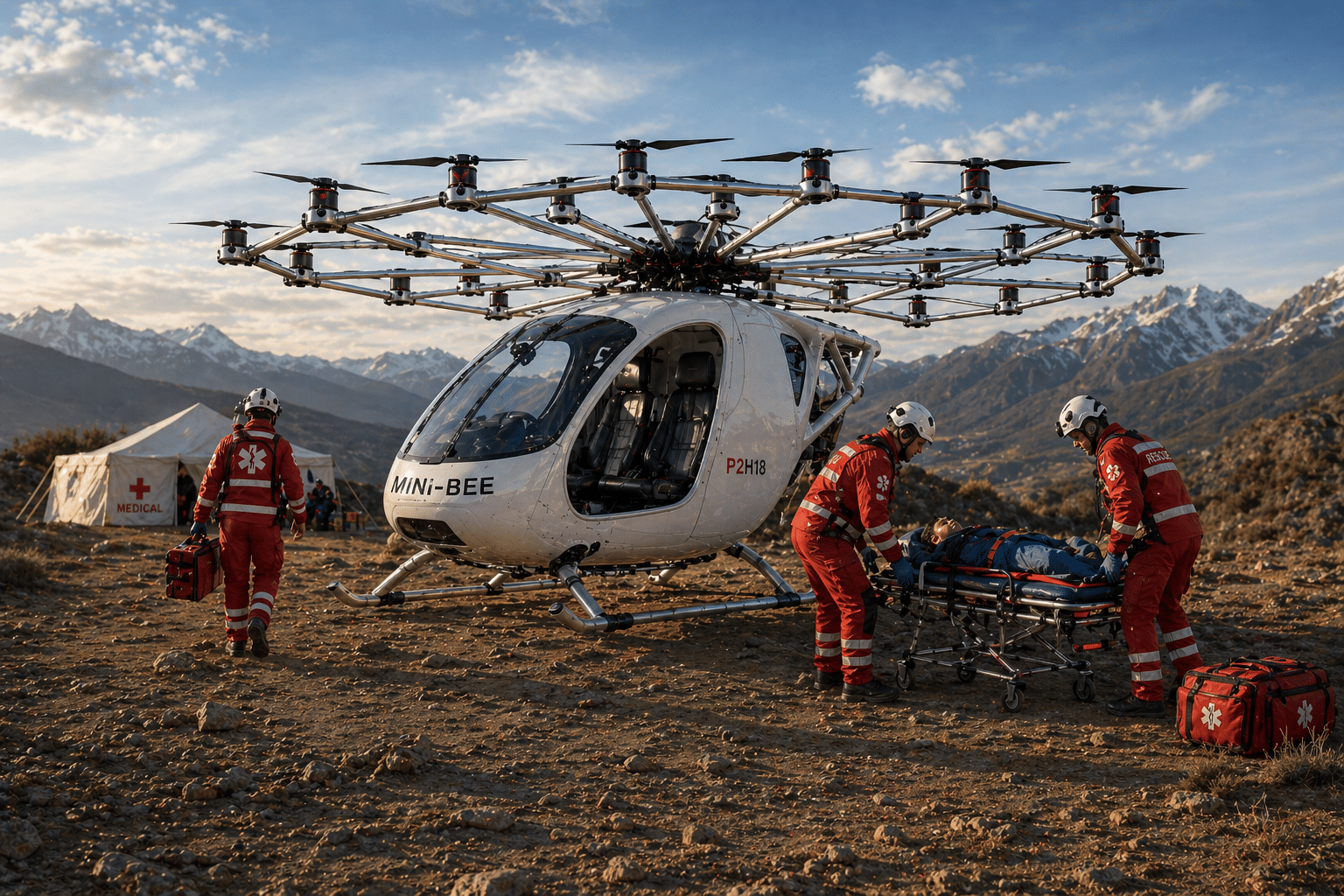
Light air ambulance
Transport of a stabilized patient or medical passenger with one pilot on board.
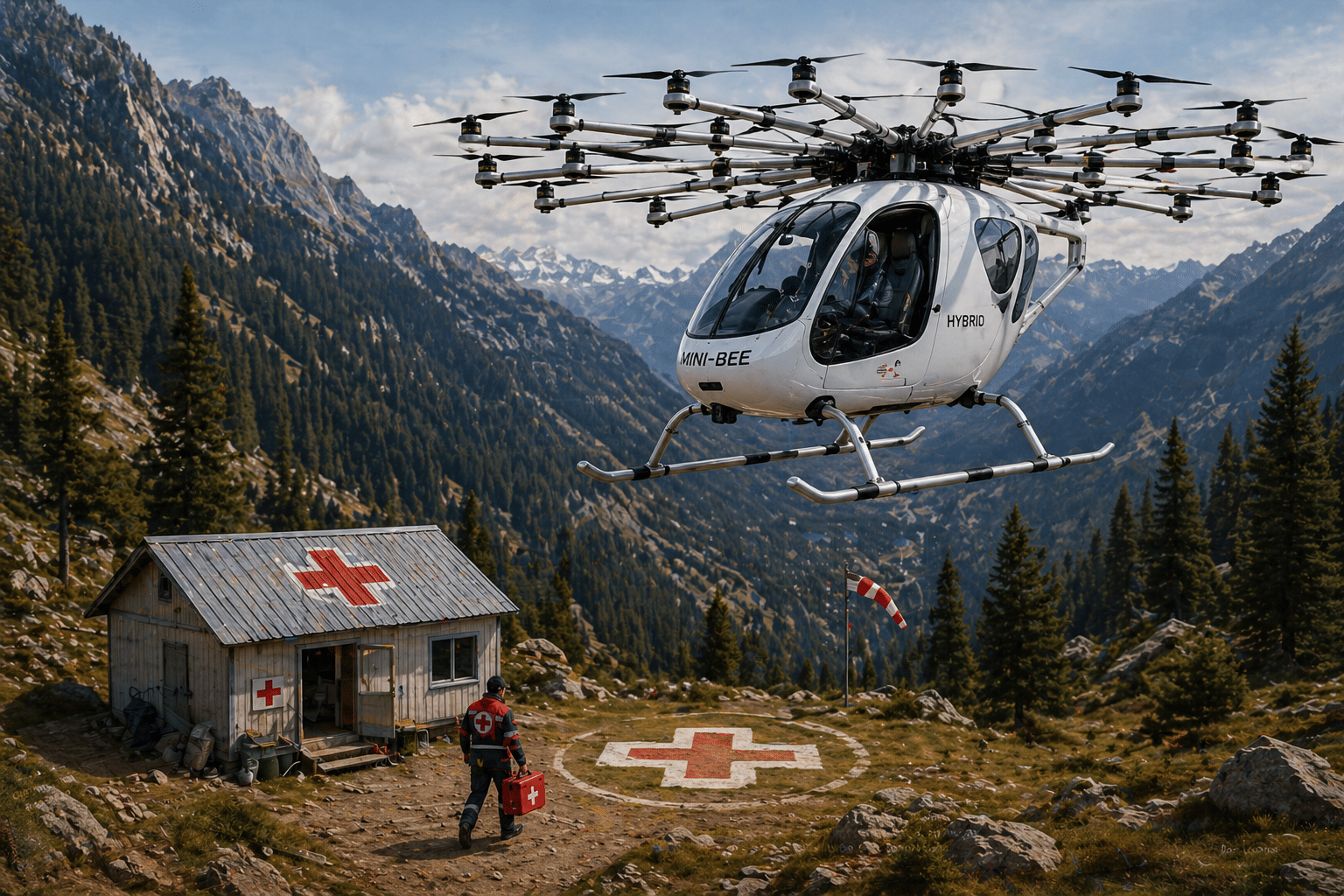
Mountain relief
Reach high-altitude clinics and rescue zones where roads or conventional access are limited.
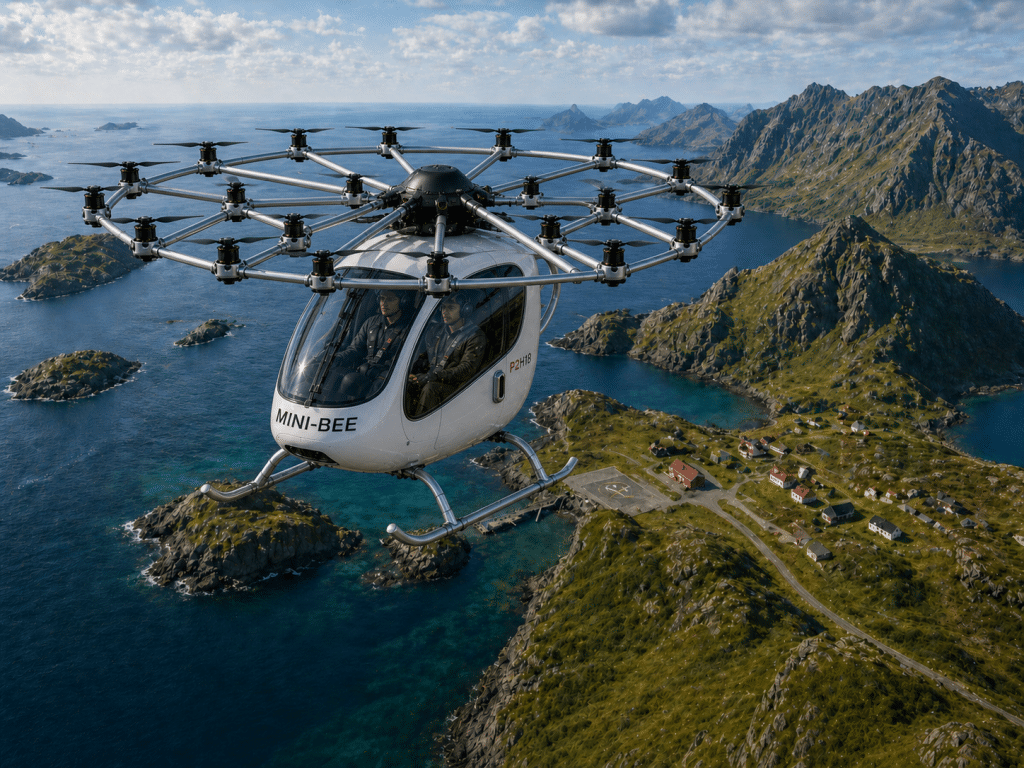
Remote access
Reach islands, mountain areas or isolated communities without runway infrastructure.
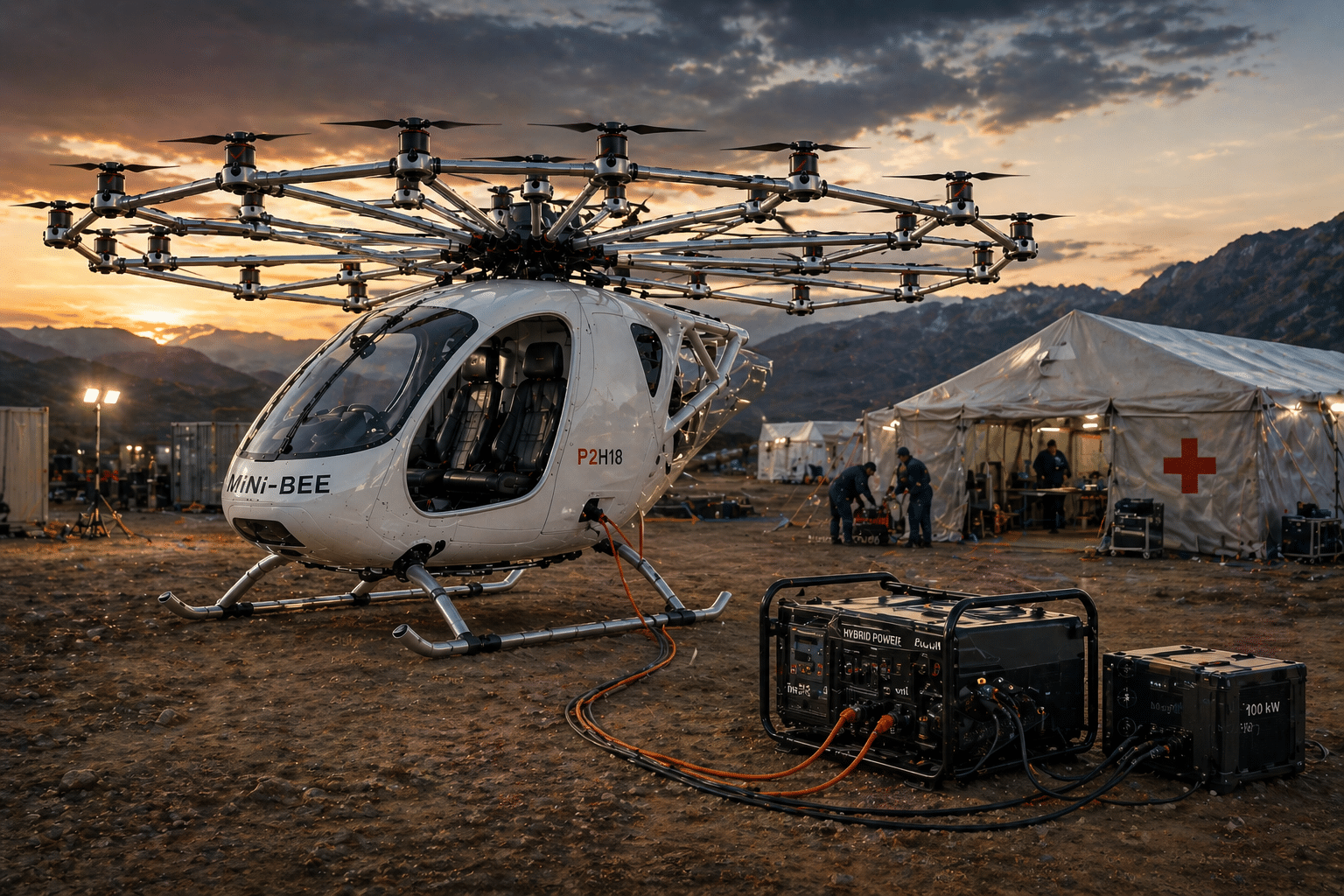
Emergency energy
Hybrid power support for field hospitals, crisis camps and urgent electrical needs.
Modular deployment
Designed to travel by civil cargo aircraft.
The Mini-Bee deployment strategy is based on modular packing into LD3 containers, reducing the logistical complexity typically associated with moving small helicopters into crisis zones.
- LD3 cockpit module
- LD3 composite tubes and structural elements
- LD3 rotor units and mission equipment
Cockpit and flight control
Simple controls, assisted by the FCU.
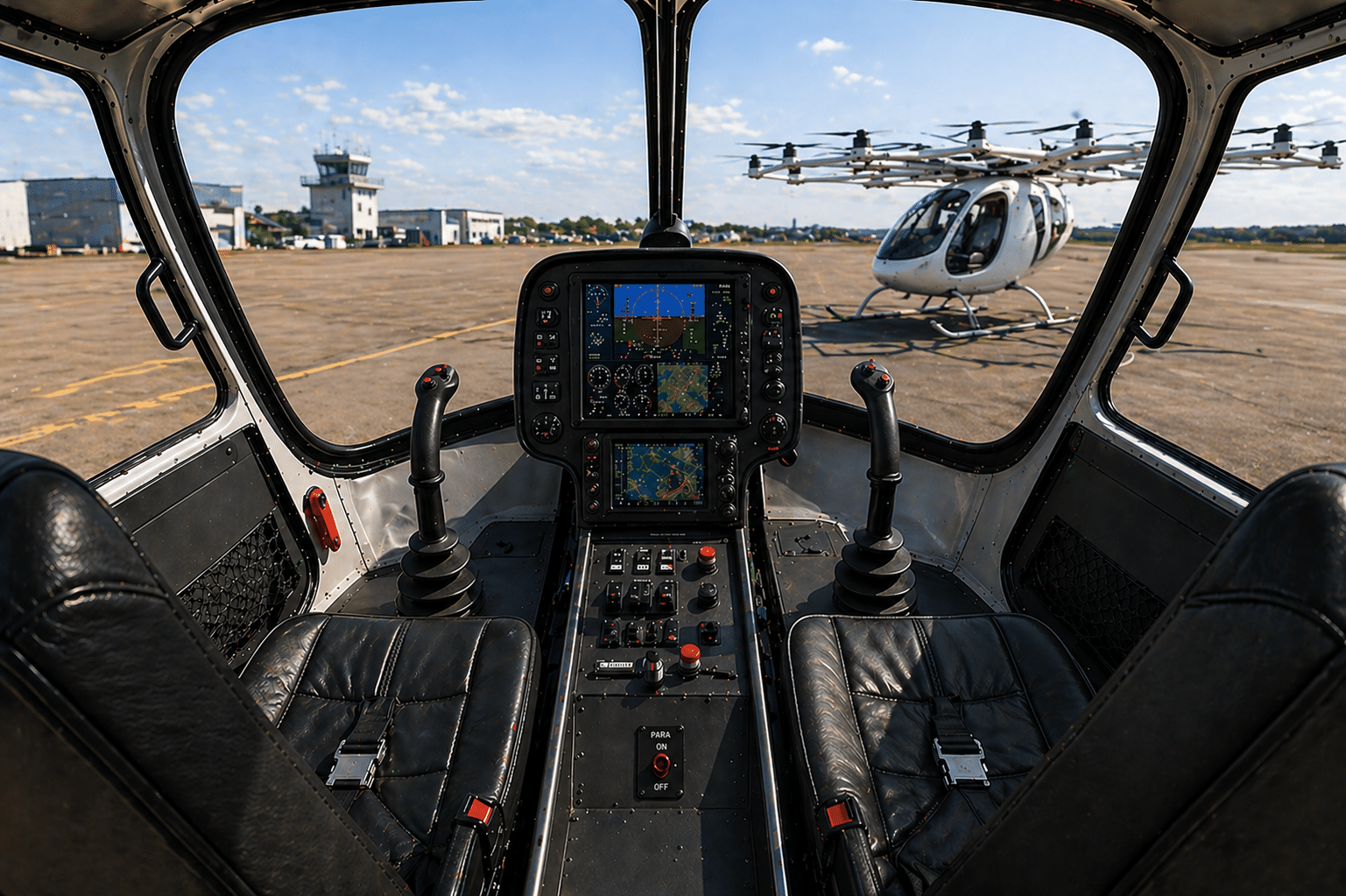
The cockpit is designed around two seats, straightforward pilot controls and assisted flight logic. The objective is to reduce workload while keeping the pilot directly connected to the aircraft.
The Flight Control Unit is being developed around STM components, inertial sensors, barometric data and power distribution logic to manage lift, pitch, roll, yaw and emergency modes.
Certification-oriented development
Prototype today, certification mindset from the start.
Mini-Bee is currently presented as a TRL4 demonstrator. The technical roadmap focuses on detailed structural design, 18-rotor FCU development, Rotax 916 iS ground testing, hybrid power generation and equipment validation.
Development references include CS-27 small rotorcraft logic, SC-VTOL-capable aircraft considerations, hybrid propulsion compliance work and future requirement compliance matrices.
Current stage · TRL4
2025–2026 focus
Collaborative design with academic and industrial partners, FCU 18-rotor test bench, Rotax + Kanardia ground tests, EMRAX hybrid generation tests, supercapacitor integration and structural validation.
LD3 deployment
Unpacked, assembled and prepared close to the mission zone.
The aircraft is designed around rapid deployment logic: civil cargo transport, modular unloading, controlled assembly and mission preparation close to the operational area.
This approach supports humanitarian operations where every hour saved in logistics can directly improve response capability.
Open-innovation project
Join the Mini-Bee open-innovation project.
Mini-Bee is coordinated by Technoplane SAS under the Lesser Open Bee License 1.3, enabling academic, industrial and independent contributors to collaborate on a practical humanitarian VTOL demonstrator.