
VTOL technology
The Evolution and Future of VTOL Technology
From Paul Cornu’s pioneering helicopter flight in 1907 to today’s fully electric vertical aircraft, VTOL technology has transformed how we imagine mobility.
Marrying efficiency, sustainability, and innovation, VTOL aircraft are redefining the future of aviation — on land, in cities, and beyond.
A vertical future
VTOL is moving from niche aviation to practical mobility infrastructure.
The evolution of VTOL combines helicopters, tiltrotors, distributed propulsion, electric powertrains and advanced control systems into a new generation of aircraft.
History
Historical Milestones of VTOL Technology
1907
Paul Cornu
Achieved the first free helicopter flight. Although short and unstable, it laid the foundation for vertical aviation.
1942
Sikorsky R-4
The first mass-produced helicopter, proving VTOL could become a practical aviation capability.
1969
Harrier Jump Jet
The first operational fixed-wing aircraft with vertical takeoff and landing using vectored thrust.
State of the art
Advanced VTOL aircraft combine speed, control and vertical access.
Current VTOL projects range from advanced helicopters to tiltrotors and fully electric aircraft. Each architecture explores a different balance between speed, range, noise, infrastructure and operational cost.
- Airbus X3 / H160: speed, rotorcraft efficiency and fly-by-wire control
- Osprey V-22: helicopter agility combined with airplane-like cruise
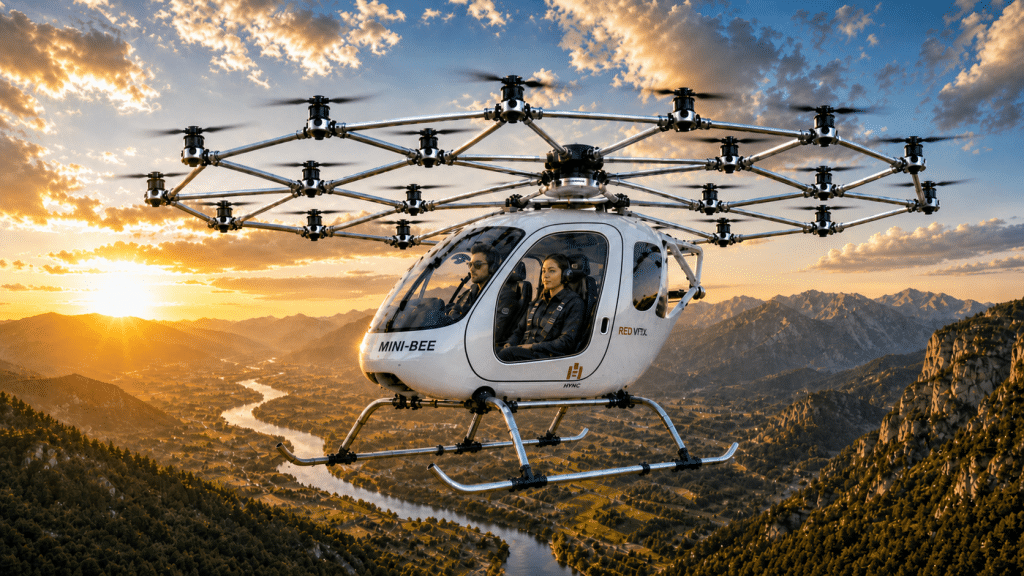
- eVTOL aircraft: silent, clean and short-range urban mobility
Electric propulsion
The rise of electric VTOL technology.
Electric propulsion is the beating heart of next-generation VTOL. eVTOL aircraft are designed for clean, efficient short-distance flights, ideal for city commutes and cargo drops.
Advantages
Why eVTOL matters
- Eco-friendly: no direct CO₂ emissions during electric operation
- Affordable: lower maintenance due to fewer moving parts
- Quiet: reduced noise for urban and sensitive environments
Challenges
What still needs solving
- Battery energy density limits range and payload
- Thermal management is critical for safety
- Certification frameworks are still emerging
- Urban infrastructure and vertiports must be developed
Emerging trends
The next generation of VTOL aircraft is already taking shape.
01
Autonomous Navigation
AI systems and sensor fusion are enabling safer pilotless VTOL flight operations.
02
Hybrid Platforms
Combining combustion and electric systems can improve range while battery technology evolves.
03
Advanced Materials
Carbon-fiber and composite structures reduce weight while maintaining strength and stiffness.
Future applications
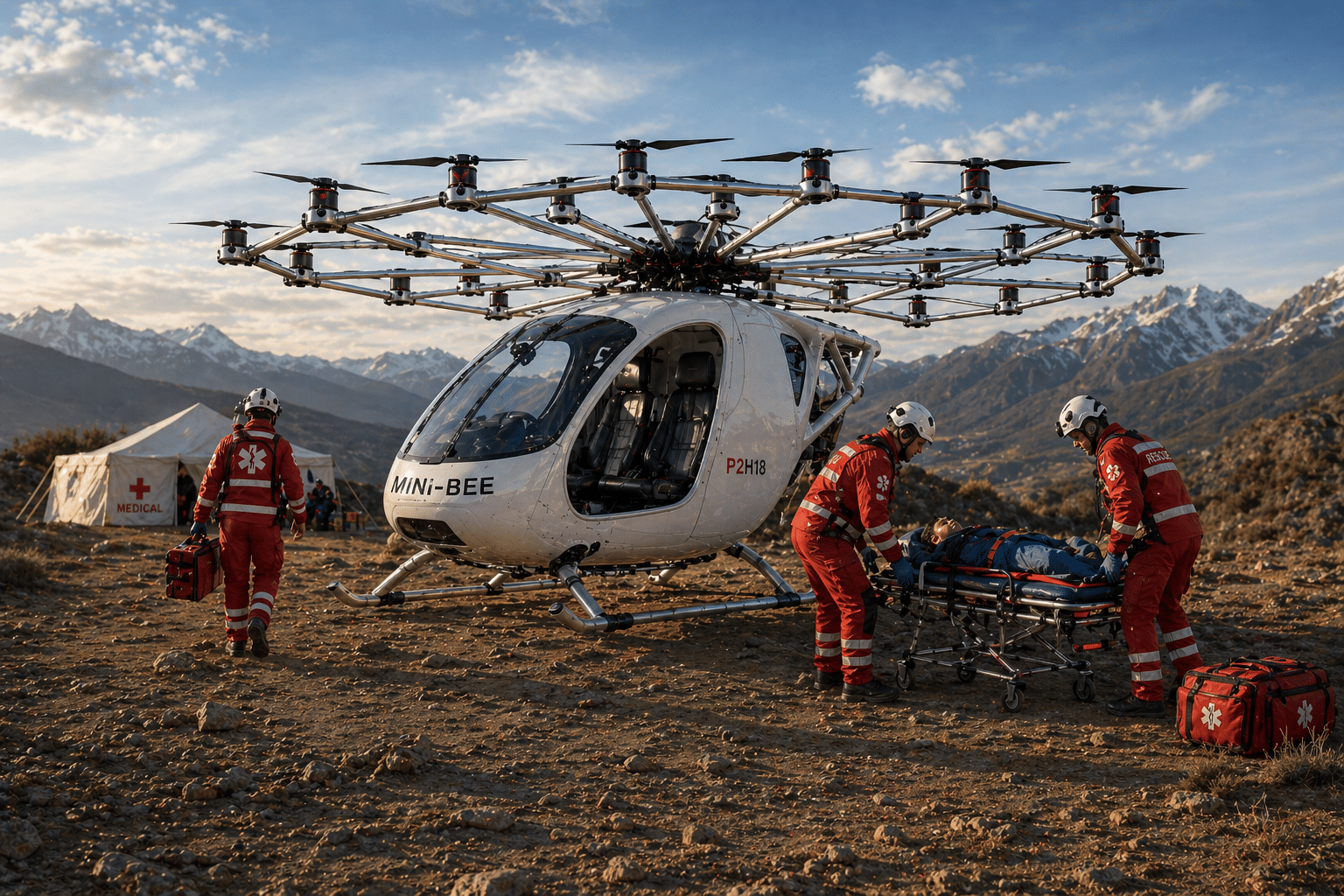
From emergency care to logistics and defense.
VTOL aircraft bring new flexibility to sectors that need fast access, short deployment time and reduced dependency on ground infrastructure.
- EMS: quick access to patients in hard-to-reach zones
- Rescue: fast response in disaster areas
- Delivery: last-mile aerial cargo
- Surveillance: military, border and intelligence missions
Engineering methods
The role of model-based development in VTOL engineering.
Designing VTOL aircraft means managing complex systems. Model-Based Systems Engineering enables simulation, optimization of electrical systems and faster certification workflows.
The future is vertical
A bright future for VTOL.
From its humble beginnings in 1907 to today’s electric and autonomous aircraft, VTOL technology is reshaping the way we move, save lives and deliver across the skies.